Proven Daily Routines for Success
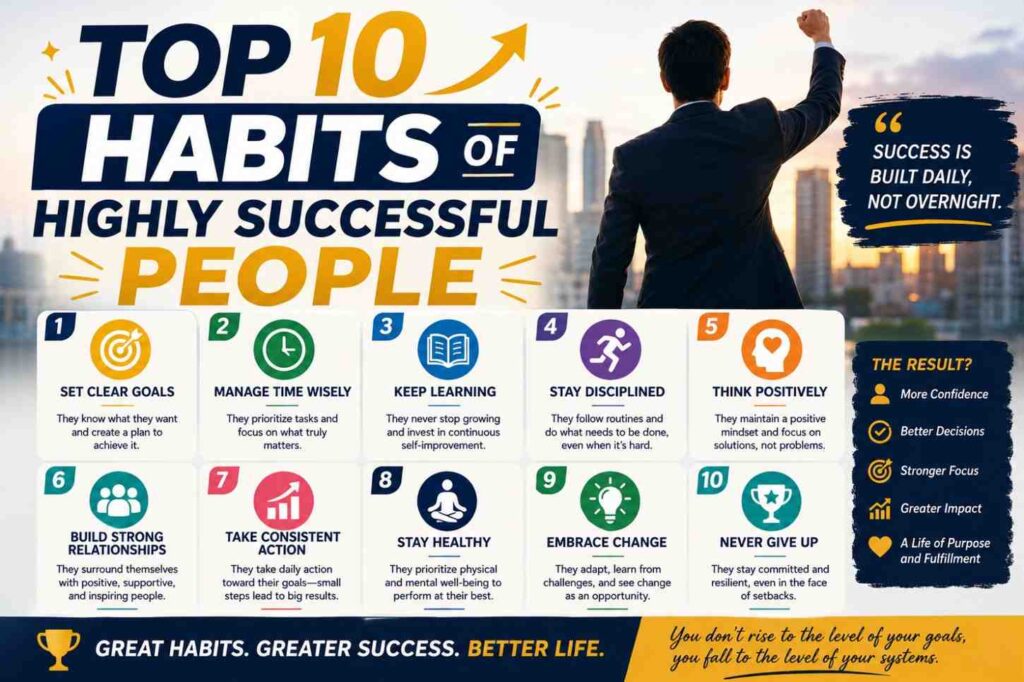
The Top 10 Habits of Highly Successful People are based on consistent behaviors that help individuals achieve long-term success in their personal and professional lives. Success is not usually the result of a single breakthrough moment, but rather the outcome of small, disciplined actions repeated every day over time. These habits create structure, improve focus, and help individuals stay aligned with their goals even during challenges.
Highly successful people from different fields such as business, sports, education, and entrepreneurship often share similar daily routines. They prioritize productivity, maintain strong self-discipline, and continuously work on improving their skills and mindset. Rather than relying on motivation alone, they build systems and habits that keep them consistent regardless of external circumstances.
One of the key reasons these habits are effective is because they focus on both mental and physical well-being. Successful individuals understand the importance of time management, goal setting, continuous learning, and maintaining healthy routines such as exercise and proper sleep. These combined habits help them perform at a high level consistently.
Ultimately, these success habits are not limited to a specific group of people—they can be adopted by anyone willing to improve their daily routine. By applying these principles with consistency and patience, individuals can gradually enhance their productivity, discipline, and overall life direction, leading to meaningful long-term success.
What Are the Top 10 Habits of Highly Successful People?
Understanding the habits of successful people is one of the most practical ways to improve personal performance and long-term achievement. Success is rarely the result of one major action; instead, it is the outcome of repeated behaviors that are refined over time. These habits are not exclusive to entrepreneurs, CEOs, or public figures. They are accessible to anyone willing to adopt structured routines and disciplined thinking.
Successful people tend to follow predictable behavioral patterns. They focus on clarity, consistency, and continuous improvement. Rather than relying on motivation, they build systems that guide their daily actions. These systems help them stay productive even during stressful or uncertain periods. When you analyze high achievers across different industries, you notice that their habits are surprisingly similar despite differences in background or profession.
Another important aspect of success habits is intentionality. Highly successful individuals do not act randomly. Every action they take is aligned with a larger goal or vision. Whether it is learning, working, or resting, everything is part of a structured lifestyle. This is what separates them from individuals who struggle with consistency.
In modern personal development research, habits are considered the foundation of behavior change. Once a habit is formed, it reduces mental effort and increases efficiency. This allows individuals to focus on higher-level thinking and decision-making. Understanding these habits is the first step toward transforming your own life.
Defining success habits in modern life
In today’s fast-paced environment, success habits are no longer just about discipline—they are about adaptability. A success habit is any repeated behavior that contributes positively to personal or professional growth. This can include waking up early, journaling, prioritizing tasks, or engaging in lifelong learning.
Modern success habits are deeply influenced by technology, work culture, and lifestyle changes. For example, digital productivity tools now play a major role in how people manage time and tasks. Similarly, mindfulness practices have become essential for maintaining mental clarity in a distraction-heavy world.
What makes a habit truly powerful is its ability to automate decision-making. When a behavior becomes habitual, it no longer requires conscious effort. This frees up mental energy for creativity, problem-solving, and strategic thinking.
Why habits matter more than talent
Talent may give individuals a starting advantage, but it is habits that determine long-term success. Consistent actions over time have a greater impact than natural ability alone. Habits create compounding effects—small improvements repeated daily lead to significant outcomes over months and years.
Successful people often outperform more talented individuals simply because they are more consistent. They show up every day, even when motivation is low. This consistency builds expertise, confidence, and resilience.
Habits also reduce dependency on willpower. Instead of relying on emotional motivation, successful individuals rely on structured routines.
How successful people structure their habits
Successful individuals design their habits around systems rather than goals alone. While goals provide direction, systems determine progress. Instead of only setting goals, they build routines that enforce productivity automatically.
They group habits into morning, work, and evening routines. Each serves a purpose: preparation, execution, and reflection. Habit stacking is also commonly used, where new habits are attached to existing ones to improve consistency.
Why Habits Matter for Success and Productivity
Habits are the backbone of human behavior and play a crucial role in shaping long-term outcomes. Without strong habits, even highly skilled individuals struggle to maintain progress.
In professional environments, habits determine efficiency, time management, and consistency. Successful individuals focus on optimizing their hours rather than simply increasing them.
Habits reduce inconsistency and build identity. When actions are repeated regularly, they become part of who a person is.
The Science Behind Habit Formation
Habit formation is based on a psychological process known as the habit loop, which includes three key stages: cue, routine, and reward. The cue triggers the behavior, the routine is the action itself, and the reward reinforces the behavior, making it more likely to be repeated. Over time, this loop becomes automatic as the brain starts to associate specific cues with certain behaviors. From a neuroscience perspective, repetition strengthens neural pathways in the brain, making habits easier to perform with less conscious effort. As these pathways become more efficient, behaviors shift from intentional actions to automatic routines. This is why consistent practice is essential for building both positive habits and breaking negative ones.
Connection Between Habits and Long-Term Success
Long-term success is rarely the result of sudden breakthroughs; instead, it is built through the accumulation of small, consistent habits over time. Each positive action may seem minor on its own, but when repeated daily, these actions compound and lead to significant personal and professional growth. This compounding effect means that even small improvements in behavior—such as reading daily, exercising regularly, or managing time effectively—can produce major results over months and years. Successful individuals understand that discipline and consistency are more powerful than short-term motivation.
Habit Impact on Productivity and Focus
Good habits play a crucial role in improving productivity by reducing unnecessary distractions and mental fatigue. When daily routines are structured, the brain does not need to constantly make small decisions, which helps conserve energy for more important tasks. Structured habits such as planning the day in advance, prioritizing tasks, and following a consistent schedule improve focus and efficiency. This allows individuals to work with greater clarity, reduce procrastination, and maintain steady progress toward their goals.
Top 10 Habits of Highly Successful People
The Top 10 Habits of Highly Successful People (Core Breakdown) explain the essential daily routines and mindset patterns that help individuals achieve long-term success in life, business, and personal growth. These habits are not based on luck or talent alone but on consistent actions repeated over time. Successful people focus on discipline, clarity, and continuous improvement, which allows them to stay productive and achieve meaningful results in different areas of life.
This breakdown helps you understand not only what these habits are but also how they work together to create success. Each habit supports the others, forming a strong system of productivity, focus, and personal development. By practicing these habits consistently, anyone can gradually improve their mindset, performance, and overall life direction.
| Habit Category | What It Focuses On | Real-Life Application | Impact on Success |
|---|---|---|---|
| Goal Setting & Vision | Defining clear short-term and long-term objectives | Writing daily, weekly, and yearly goals | Provides direction and eliminates confusion |
| Discipline & Consistency | Following routines regardless of motivation | Daily schedule adherence and self-control practices | Builds reliability and long-term progress |
| Continuous Learning | Skill development and knowledge expansion | Reading books, online courses, mentorship | Improves adaptability and career growth |
| Time Management Systems | Structuring and optimizing daily hours | Time blocking, prioritization techniques | Increases productivity and reduces wasted time |
| Health & Energy Management | Physical and mental well-being | Exercise, sleep routine, balanced diet | Enhances focus, energy, and performance |
1. Setting clear goals
Clear goals provide direction and act as a roadmap for success in both personal and professional life. Successful people define specific, measurable, and realistic objectives so they always know exactly what they are working toward. Instead of working randomly or reacting to situations, they operate with a clear purpose that keeps them focused and motivated over the long term. This clarity helps eliminate distractions and ensures that time and energy are invested only in meaningful activities.
When goals are properly structured, they become easier to break down into smaller, actionable steps. This step-by-step approach makes large achievements feel more manageable and less overwhelming. Over time, consistent progress toward these smaller milestones leads to major long-term success while also building confidence and discipline.
2. Practicing daily discipline
Daily discipline is the foundation of consistency and long-term achievement. Highly successful people do not depend on motivation alone because motivation can fluctuate, but discipline ensures they continue working even on difficult days. They follow structured routines, stick to schedules, and complete important tasks regardless of how they feel in the moment.
This habit builds mental strength and reliability over time. By training themselves to stay consistent, successful individuals develop a strong sense of control over their actions. This not only improves productivity but also helps them avoid procrastination, distractions, and short-term temptations that can slow down progress.
3. Continuous learning mindset
A continuous learning mindset allows successful people to stay adaptable and competitive in a constantly changing world. They actively seek new knowledge through reading, training, mentorship, and real-life experiences. This habit helps them improve their skills and stay updated in their field, which is essential for long-term growth.
Learning continuously also enhances creativity and problem-solving abilities. When individuals expose themselves to new ideas and perspectives, they are better equipped to make informed decisions and handle complex challenges. This habit ensures they are always evolving rather than remaining stagnant.
4. Time management mastery
Time management is one of the most important skills for achieving success because time is a limited resource. Successful people prioritize tasks based on importance and impact rather than urgency alone. They often plan their day in advance, organize their schedules, and focus on high-value activities that bring meaningful results.
By managing time effectively, they reduce stress and increase efficiency. Structured planning allows them to complete more work in less time while maintaining quality. This habit also helps create balance between work, personal life, and self-improvement activities.
5. Healthy lifestyle habits
Healthy lifestyle habits play a critical role in maintaining high performance. Successful individuals prioritize regular exercise, balanced nutrition, and sufficient sleep to keep their body and mind functioning at an optimal level. These habits directly affect energy levels, concentration, and emotional stability.
When health is well-maintained, productivity naturally increases. A strong body supports a focused mind, allowing individuals to work more efficiently and make better decisions. Over time, these habits also reduce stress and improve overall quality of life, making success more sustainable.
Morning Routines of Highly Successful People
Morning routines of highly successful people are carefully structured habits designed to maximize focus, productivity, and mental clarity at the start of the day. Instead of starting their mornings in a rushed or reactive way, they intentionally create routines that help them gain control over their time and energy. These routines often include a combination of early waking, mindfulness practices, physical activity, and goal planning, all of which contribute to a strong and productive mindset.
The purpose of a well-designed morning routine is to set the tone for the entire day. Successful individuals understand that the first few hours after waking have a major impact on decision-making, energy levels, and overall performance. By using this time effectively, they reduce stress, improve concentration, and create a sense of direction before distractions begin.
Although routines may vary from person to person, the core principles remain the same: discipline, consistency, and intentional living. These habits help build momentum early in the day, making it easier to stay productive and focused throughout all daily tasks and long-term goals.
Early waking habits
Early waking is a common habit among highly successful people because mornings offer quiet, uninterrupted time for focus and planning. Waking up early allows individuals to start their day without distractions, giving them a sense of control over their schedule. This time is often used for setting priorities, reviewing goals, or simply preparing mentally for the day ahead. It creates a calm and structured beginning that improves overall productivity.
In addition, early mornings are considered the most mentally fresh hours of the day. Many successful individuals use this time to work on important tasks that require deep thinking and concentration. By starting the day early, they gain extra hours that help them stay ahead and maintain consistency in their routines.
Mindfulness and planning
Mindfulness practices such as meditation, journaling, or deep breathing help successful people maintain mental clarity and emotional balance. These activities reduce stress, improve focus, and allow individuals to approach the day with a calm and positive mindset. Journaling also helps organize thoughts and set clear intentions for daily tasks.
Planning is another important part of this routine. By outlining priorities and scheduling tasks in advance, successful individuals reduce uncertainty and improve efficiency. This combination of mindfulness and planning creates a strong mental foundation that supports better decision-making throughout the day.
Physical activity in the morning
Morning exercise is a powerful habit that boosts both physical and mental performance. Activities such as walking, jogging, stretching, or gym workouts increase blood flow, improve energy levels, and activate the body for the day ahead. It also helps release endorphins, which enhance mood and reduce stress.
Regular morning physical activity also improves focus and cognitive performance. Successful individuals often find that exercising early helps them stay more alert, productive, and motivated throughout the day. Over time, this habit contributes to better health, discipline, and long-term consistency in daily routines.
| Time Segment | Activity Type | Purpose | Success Outcome |
|---|---|---|---|
| Early Morning (5–8 AM) | Planning, exercise, mindfulness | Set mental clarity and energy levels | Improves focus and decision-making |
| Mid Morning (8–12 PM) | Deep work sessions | High-priority task execution | Maximum productivity output |
| Afternoon (12–4 PM) | Meetings, communication, collaboration | Teamwork and external engagement | Better networking and coordination |
| Evening (4–8 PM) | Skill learning and review | Personal development and reflection | Continuous growth and improvement |
| Night (8–11 PM) | Relaxation and recovery | Rest, reading, and mental reset | Better sleep and next-day performance |
Productivity Strategies Used by Successful People
Productivity strategies used by successful people are based on intentional planning, focused execution, and strong self-discipline. Instead of working in a random or reactive way, they follow structured systems that help them manage time effectively and achieve high-quality results consistently. These strategies are designed to reduce distractions, improve focus, and ensure that energy is directed toward meaningful work rather than low-value tasks. By applying these methods, successful individuals are able to maintain long-term productivity without feeling overwhelmed.
These strategies are not just about doing more work, but about doing the right work at the right time. Successful people understand that productivity is a skill that can be developed through habits such as prioritization, focused work sessions, and digital discipline. Over time, these habits create a strong foundation for efficiency, clarity, and professional growth.
Task prioritization techniques
Task prioritization techniques help successful individuals decide which tasks deserve immediate attention and which can be delayed or delegated. They focus on high-impact activities that directly contribute to their goals instead of spending time on less important work. This ensures that their daily efforts are aligned with long-term objectives and meaningful outcomes.
Many successful people use structured methods like priority lists, the Eisenhower Matrix, or goal-based scheduling to organize their tasks effectively. By clearly identifying what matters most, they avoid confusion and reduce wasted effort. This habit allows them to stay focused, make better decisions, and consistently progress toward their goals.
Deep work and focus sessions
Deep work and focus sessions involve dedicating uninterrupted time to important and mentally demanding tasks. During these sessions, successful people eliminate distractions and concentrate fully on one task, allowing them to produce high-quality work in less time. This level of focus helps improve creativity, problem-solving, and efficiency.
By practicing deep work regularly, individuals train their minds to sustain attention for longer periods. This reduces errors, increases output quality, and strengthens mental discipline. Over time, deep work becomes a powerful habit that significantly enhances productivity and performance in both personal and professional life.
Digital distraction control
Digital distraction control is the practice of limiting interruptions from phones, social media, and unnecessary notifications. Successful people understand that constant digital distractions can break focus and reduce productivity, so they actively manage their screen time and online habits.
They often use techniques such as turning off notifications, setting app limits, or scheduling specific times for checking messages. By controlling digital noise, they protect their attention and maintain deeper focus on important tasks. This leads to better time management, improved concentration, and higher overall productivity.
Mindset and Discipline Habits for Long-Term Success
Mindset and discipline habits are the foundation of long-term success because they shape how individuals think, act, and respond to challenges over time. A strong mindset helps people stay focused on growth, while discipline ensures they continue taking consistent action even when motivation is low. Together, these two qualities create a powerful system that supports steady progress in both personal and professional life. Instead of relying on short bursts of motivation, successful individuals build structured habits that keep them moving forward every day.
A strong mindset encourages resilience, adaptability, and continuous learning, which are essential for handling setbacks and uncertainties. Discipline complements this by turning intentions into consistent actions, ensuring that goals are not just planned but actually achieved. Over time, these habits help individuals develop emotional stability, better decision-making skills, and long-term focus. This combination ultimately leads to sustainable success, as it allows people to grow steadily while maintaining control over their actions and direction in life.
Growth mindset development
Growth mindset development is the belief that intelligence, skills, and abilities can be improved through effort, learning, and persistence. Successful individuals do not see challenges as failures but as opportunities to grow and become stronger. Instead of avoiding mistakes, they analyze them to understand what went wrong and how they can improve in the future. This approach helps them stay open to learning and continuous self-improvement.
This mindset builds long-term confidence and resilience because it shifts focus from perfection to progress. When people accept that improvement comes through practice and experience, they become more willing to take risks and try new strategies. Over time, this leads to better problem-solving skills, creativity, and consistent personal and professional growth.
Emotional control and resilience
Emotional control and resilience help individuals stay calm and balanced during stressful or challenging situations. Successful people do not allow emotions like fear, anger, or frustration to control their decisions. Instead, they think logically, assess the situation carefully, and respond in a stable and controlled manner.
Resilience allows them to recover quickly from setbacks and continue moving forward without losing motivation. This mental strength helps them stay focused on long-term goals even when difficulties arise. Over time, emotional control improves decision-making, reduces stress, and builds stronger mental stability.
Self-reflection practices
Self-reflection is the habit of regularly reviewing one’s actions, decisions, and outcomes to identify areas for improvement. Successful individuals take time to evaluate their progress and understand what is working well and what needs adjustment. This practice increases self-awareness and encourages personal growth.
By reflecting on their experiences, they can identify patterns in behavior and make better decisions in the future. Self-reflection also helps prevent repeated mistakes and strengthens learning over time. This habit supports continuous improvement and long-term success.
How to Build These Habits in Your Daily Life
Building strong habits for long-term success requires patience, consistency, and a structured approach. Instead of trying to change everything at once, successful individuals focus on gradual improvements that fit naturally into their daily routines. They understand that habits are formed through repetition, not motivation, so they prioritize consistency over intensity. By starting with small actions and slowly increasing effort over time, they make personal development sustainable and realistic.
The key to building these habits is creating a system that supports them. This includes setting clear goals, designing routines, removing distractions, and tracking progress regularly. When habits are integrated into a structured daily schedule, they become easier to maintain and eventually turn into automatic behaviors. Over time, these small consistent actions compound into major improvements in productivity, mindset, and overall life success.
Start small and stay consistent
Starting small is the most effective way to build long-term habits without feeling overwhelmed. Successful people focus on simple, manageable actions that are easy to repeat daily. This makes it easier to stay consistent and reduces the chances of quitting early.
Consistency matters more than intensity when developing habits. Even small actions performed regularly can lead to significant long-term improvements. Over time, these small steps become automatic parts of daily life, leading to lasting personal growth.
Use habit stacking techniques
Habit stacking is a method where new habits are attached to existing routines. For example, someone can add journaling after drinking morning tea or planning tasks after breakfast. This makes new habits easier to remember and integrate into daily life.
By linking new habits with established ones, individuals reduce resistance and increase consistency. This technique simplifies habit formation and helps build a structured daily routine. Over time, it strengthens discipline and improves productivity.
Track progress and improve
Tracking progress helps individuals stay motivated and accountable for their habits. When people monitor their actions, they become more aware of their consistency and performance. This awareness encourages discipline and helps prevent breaking routines.
Progress tracking also makes it easier to identify strengths and areas that need improvement. By reviewing results regularly, individuals can adjust their strategies and improve over time. This leads to continuous growth and long-term success.
Common Mistakes to Avoid When Building Success Habits
Building successful habits takes time, patience, and a realistic approach, but many people fail because they make avoidable mistakes early in the process. Instead of focusing on steady improvement, they often try to rush results or take on too many changes at once. Understanding these mistakes is important because it helps you stay consistent and avoid losing motivation during your personal growth journey.
When these mistakes are avoided, habit-building becomes much easier and more sustainable. Successful individuals focus on gradual progress, consistency, and realistic expectations, which allows them to build strong routines that last long-term. Small adjustments in approach can make a big difference in achieving lasting success.
Trying to change everything at once
Trying to change everything at once is one of the most common mistakes people make when building new habits. When individuals attempt to transform multiple areas of their life simultaneously, it often leads to overwhelm and burnout. Instead of improving, they struggle to maintain consistency and eventually give up altogether.
A better approach is to focus on one or two habits at a time and master them before adding new ones. This makes the process more manageable and increases the chances of long-term success. Gradual improvement is more effective than sudden, unrealistic change.
Lack of consistency
Lack of consistency is another major reason why habit-building fails. Many people start strong but fail to maintain their efforts over time. Irregular practice slows down progress and prevents habits from becoming part of daily life. Without consistency, even the best strategies do not produce results.
Successful individuals focus on showing up every day, even with small efforts. They understand that repetition is what builds habits, not intensity. Consistency creates momentum, and over time, this steady effort leads to meaningful and lasting improvements.
Unrealistic expectations
Unrealistic expectations often lead to frustration and loss of motivation. Many people expect quick results from their new habits and become discouraged when they do not see immediate progress. This mindset causes them to quit too early, even when they are on the right track.
In reality, habit formation takes time and patience. Successful individuals understand that small improvements accumulate gradually and lead to long-term success. By setting realistic expectations, they stay motivated, focused, and committed to continuous growth.
What are the top 10 habits of successful people?
The top 10 habits of successful people typically include goal setting, discipline, continuous learning, time management, healthy lifestyle habits, strong morning routines, productivity strategies, emotional control, self-reflection, and consistency. These habits work together to create structure in daily life and help individuals stay focused on long-term objectives rather than short-term distractions.
Each of these habits contributes to personal and professional growth in different ways. When practiced consistently, they improve decision-making, increase productivity, and strengthen mental resilience. Over time, they become part of a person’s natural routine, making success more sustainable and achievable.
How do successful people start their day?
Successful people usually start their day with intentional and structured routines that set a positive tone for the rest of the day. They often begin with activities like planning, exercise, meditation, or reading, which help improve focus and mental clarity. Instead of immediately reacting to messages or social media, they prioritize activities that align with their goals.
These morning routines are designed to create stability and control before the day becomes busy. By focusing on mindset and preparation early in the day, they reduce stress and improve productivity. This disciplined start helps them stay organized and perform better in both personal and professional tasks.
Can habits really make you successful?
Yes, habits play a very important role in achieving success because they create consistency over time. Small daily actions, when repeated regularly, lead to significant long-term improvements in skills, mindset, and productivity. Successful people rely on habits rather than motivation because habits ensure steady progress even when motivation is low.
Over time, these repeated behaviors shape a person’s identity and lifestyle. Good habits build discipline, improve focus, and help individuals stay committed to their goals. This consistent effort ultimately leads to long-term success in various areas of life.
How long does it take to build a habit?
Building a habit usually takes between 21 to 66 days, depending on the complexity of the behavior and the individual’s consistency. Simple habits may form quickly, while more challenging routines require more time and repetition. The key factor is not time alone, but consistent daily practice.
When a habit is repeated regularly, it becomes automatic and requires less conscious effort. Successful individuals focus on staying consistent rather than rushing results. Over time, this steady repetition helps habits become a natural part of everyday life.
What daily routines increase productivity?
Daily routines that increase productivity include time blocking, task prioritization, deep work sessions, and minimizing digital distractions. These strategies help individuals focus on high-value tasks and manage their time more effectively throughout the day. Planning ahead also reduces stress and improves workflow.
By following structured routines, people can complete more important work in less time. This leads to better focus, improved efficiency, and higher-quality output. Over time, these routines create a disciplined work style that supports long-term productivity and success.
Conclusion
The top 10 habits of highly successful people clearly show that true success is not the result of luck or sudden opportunities, but the outcome of consistent daily actions practiced over time. When individuals follow structured routines, maintain discipline, and commit to continuous learning, they gradually build the foundation needed for long-term achievement in both personal and professional life. These habits help shape mindset, improve decision-making, and create a sense of direction that keeps individuals focused on meaningful goals.
Success is not a single milestone or one-time achievement, but a continuous lifestyle built through repeated behaviors and disciplined choices. Over time, these small daily habits compound and create powerful long-term results, leading to personal growth, improved performance, and lasting success. Individuals who understand this principle are able to stay consistent, adapt to challenges, and continuously improve themselves, which ultimately allows them to achieve sustainable success in life.